Lalibela church tickets, dress code and etiquette
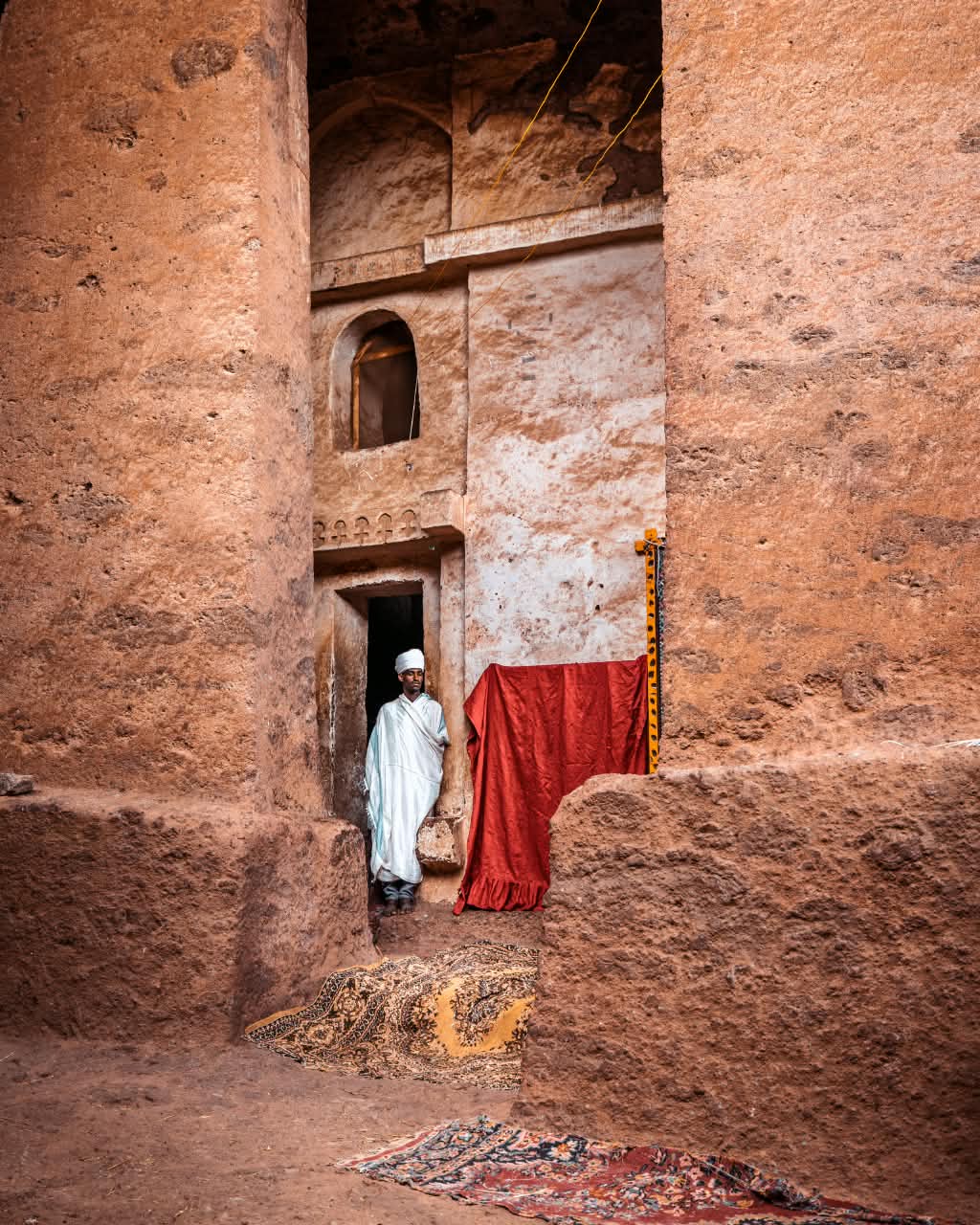
The churches of Lalibela are not museums. They are living places of worship, with priests, prayer and services every day. A little preparation helps you feel at ease and shows respect to the people who pray here.
The entrance ticket
One ticket covers all eleven churches in town, and it is valid for several days, so you can return at different times of day. Tickets are bought at the ticket office near the main church cluster. The price for foreign visitors is set by the churches and changes from time to time; ask me for the current price when you plan your trip.
Entrance tickets are not included in my tour prices. You pay them directly at the ticket office.
What to wear
- Cover your shoulders and knees. Long trousers or a long skirt are best.
- Women often cover their hair with a scarf inside the churches. It is appreciated, though visitors are not required to.
- Wear shoes that are easy to take off. You remove them at the door of every church.
- Bring socks. The church floors are covered with carpets and can be cold.
- Comfortable soles help: there are rock steps, narrow trenches and a few dark tunnels.
Inside the churches
- Speak quietly, and do not walk in front of people who are praying.
- If a service is under way, wait at the back or come back later. I know the rhythm of each church.
- Do not enter the inner sanctuary (the Holy of Holies), which is only for priests.
- Photography is generally allowed, but turn off the flash and ask before photographing priests or worshippers.
- A small torch or phone light is useful in the tunnels between churches.
Fasting days
Many Ethiopian Orthodox Christians fast on Wednesdays and Fridays and during long fasts such as Lent. On fasting days many restaurants serve delicious vegetarian food, and you may see more people praying in the churches.